


The idea for a curated men’s collection inspired by the sacred artwork of ancestral medicine cultures has lived in me for years. My love for fashion and design began long ago. During a previous life, working in the film industry, I designed and produced custom embroidered workwear: durable, comfortable, and timeless.
These days, my life is devoted to working with the ancestral medicine traditions of the America’s, and that love of design naturally evolved into creating clothing that reflects this path.
I noticed an abundance of ceremonial wear for women, but very little for men—especially quality pieces made with fine linens and cottons. My mission was to merge well-tailored, long-lasting fabrics with the profound artistry of these cultures, whose designs carry heritage, prayers, and sacred meaning far beyond aesthetics.
Going beyond traditional ceremonial wear, merging my love for durable work and casual wear, I decided to bring these designs to the every day attire - Awasqa was born.

At Awasqa, every pattern and weave we use is honored with deep respect for its roots.
I’ve spent time learning how these fabrics are created—both in the Andes and in the Amazon—immersing myself in their traditions and processes. Our designs often feature classic Andean cintas, fabrics with origins that predate the Incan Empire. Each are hand-woven from sheep, llama, and alpaca wool using drop spindles and four-post looms. Natural dyes—extracted from native plants, roots, minerals, and insects—bring these pieces to life.
The patterns tell stories of cosmology, agricultural cycles, identity, and ancestral wisdom.
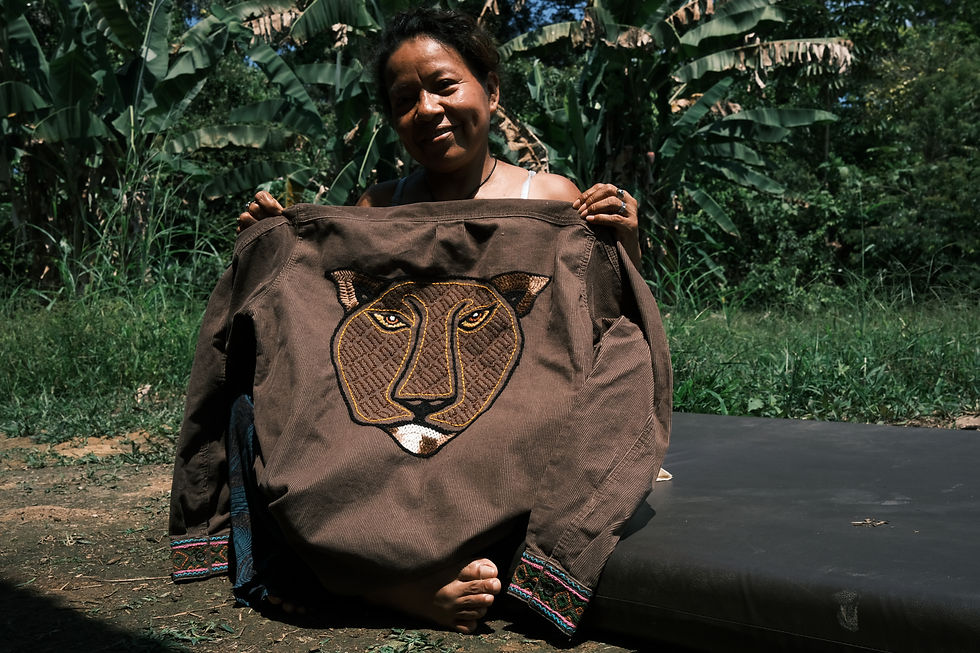
In the Amazon, we collaborate with the Shipibo-Konibo people, whose distinctive hand-stitched embroidery is well known around the world, specifically as the unofficial aesthetic for Ayahuasca.
Their textiles are used in mesas—altar cloths for ceremonies—and their intricate geometric patterns are visual representations of icaros: sacred songs sung in ceremony to call upon spirits and move energy.
Each design is unique, carrying its own prayer and intention.


While Shipibo and Andean patterns sometimes appear on clothing, access to high-quality fabrics and tailored fits is rare in these parts of the world.
That’s where we come in—bridging the world of slow, intentional fashion with the sacred art of these communities.
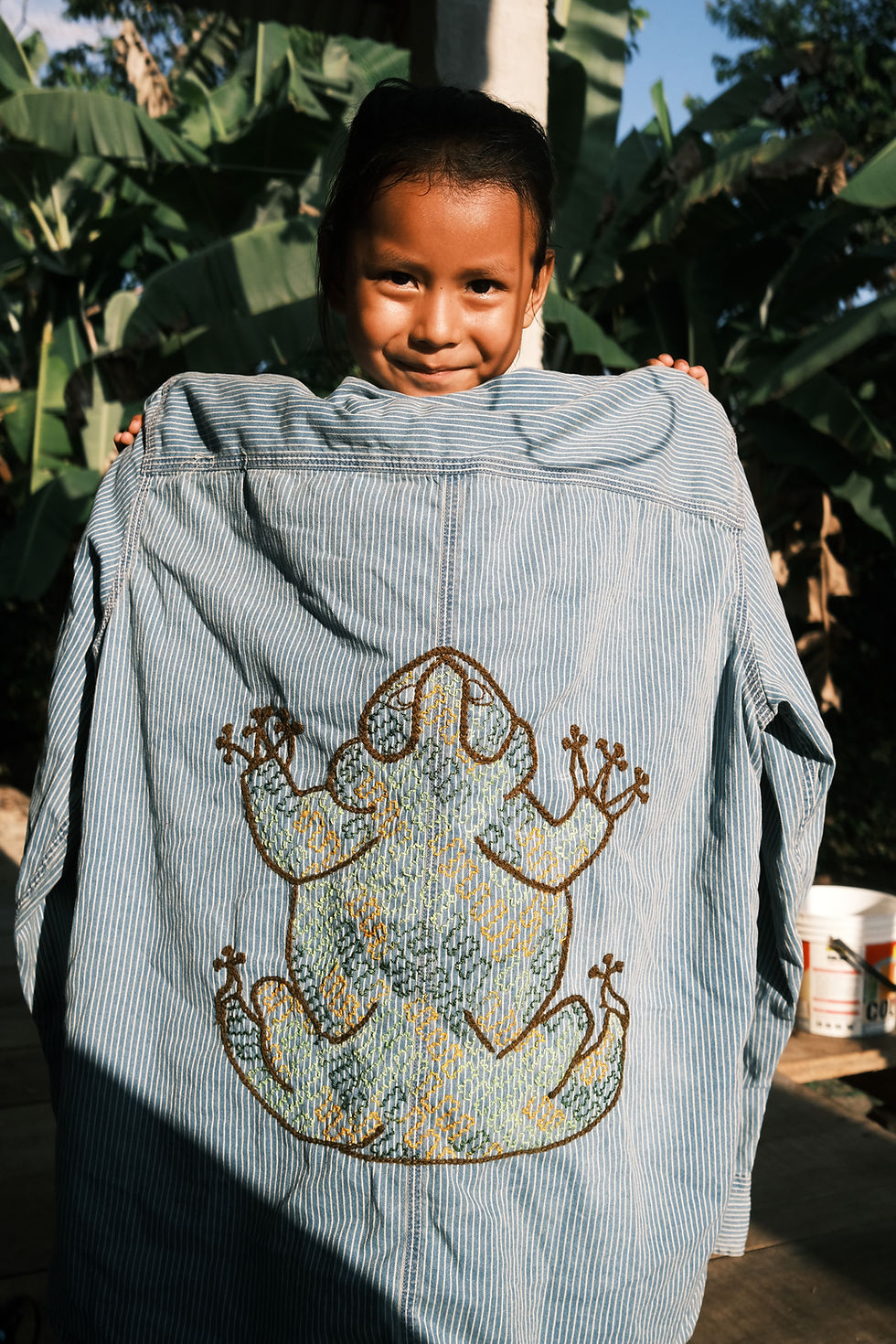
We produce several styles: Hybrid pieces, combining Andean cintas with Shipibo back-panels. Fully hand-embroidered pieces, stitched directly by Shipibo artisans.
Creating the latter is a labor-intensive process. Garments are sourced internationally, shipped to Lima, Peru and then flown deep into the Amazon—to Iquitos, Pucallpa, or remote villages up to six hours beyond. Once there, each piece is hand-embroidered by a single artisan. One hoodie, for example, may take three weeks or more to complete. Multiple families and villages collaborate to meet demand, dedicating countless hours daily to each one-of-a-kind work of art.


This is slow fashion at its core—infused with intention, time, and fair practice. None of our pieces are mass-produced and prices reflect the difficulty of sourcing and transporting garments into the jungle, as well as the artisans’ devotion, time and incredible skill. For many, a single finished piece represents a month’s salary. Supporting them through this work is a central mission of our brand.
I spend time with these families in their homes because knowing their lives, process, and struggles matters deeply to me. Many live without electricity or running water; some sleep in tents as they work toward building proper structures. Sales from these garments help fund education for the artisans’ children and support community projects, like building homes and in particular, a ceremonial maloca.
When you purchase a piece, you aren’t just buying bespoke clothing—you are helping sustain families, preserve ancient traditions, and honor the sacred artistry of the Andes and the Amazon. Each garment carries a story, a prayer, and the love of the hands that made it. The prayer behind each piece is the most important element of our brand, and it’s why we specialize in one of a kind pieces.
Wear The Prayer!
Ethan June - Founder